• Forging Independence | Building a Nation

    New Bedford Whaling Museum 18 Johnny Cake Hill, New Bedford, MA, United States

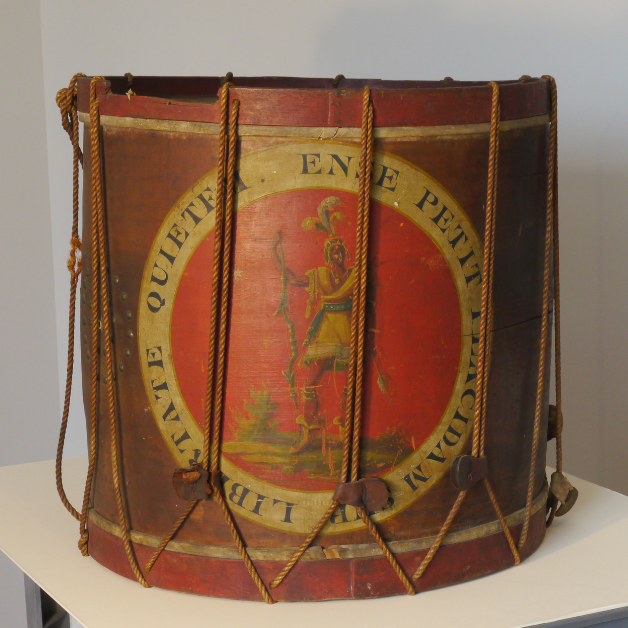
    In celebration of the 250th anniversary of the American Revolution, NBWM will open a new suite of conjoined galleries in that explore stories of independence, struggle, and citizenship in the region during the late colonial and early Republican period (1760-1830). Forging Independence | Building a Nation introduces connections between historical events and pressing issues of today, asking visitors to consider what ideas are embodied in the terms and ideas of Independence and Nationhood. Words like patriotism, freedom, taxation, citizenship, liberty, equality, justice, tolerance, and independence serve as keystones within the installation to encourage thoughtful engagement with concepts that transcend the past and directly connect with our present. Associations forged between objects, concepts, and individuals broach insightful civic-minded questions about what it means to be “American.” What did colonial citizens think America should or would be, and how do we today continue to ask those questions and shape that outcome today?
  • Ahab’s Head: American Vengeance

    New Bedford Whaling Museum 18 Johnny Cake Hill, New Bedford, MA, United States

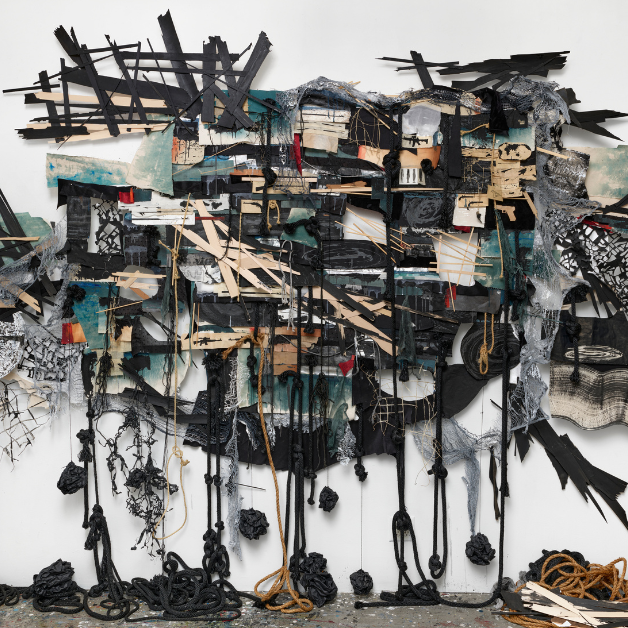
    In Ahab’s Head: American Vengeance, a new installation work created for the New Bedford Whaling Museum, Whitman seeks to capture Ahab’s madness and the ominous feeling of dread and inevitable violence that pervades the novel. In this work, Whitman encourages visitors to reflect on how these themes are also mirrored in American society. Hanging sculptural forms made from rope and fabric cast shadows on wall-drawn charts depicting fictitious whaling voyages. Two giant assemblages, one inspired by Ahab and Moby-Dick and the other of the destruction of the ship, the Pequod. Together with a newly created soundscape and weaponry from the Museum collection, Ahab’s Head will place visitors at the center of Ahab’s obsession and offer a meditation on violence in the world of Moby-Dick and beyond.

  • Author Book Talk Eric Jay Dolin, Rebels at Sea: Privateering in the American Revolution (W.W. Norton, 2022)

    New Bedford Whaling Museum 18 Johnny Cake Hill, New Bedford, MA, United States

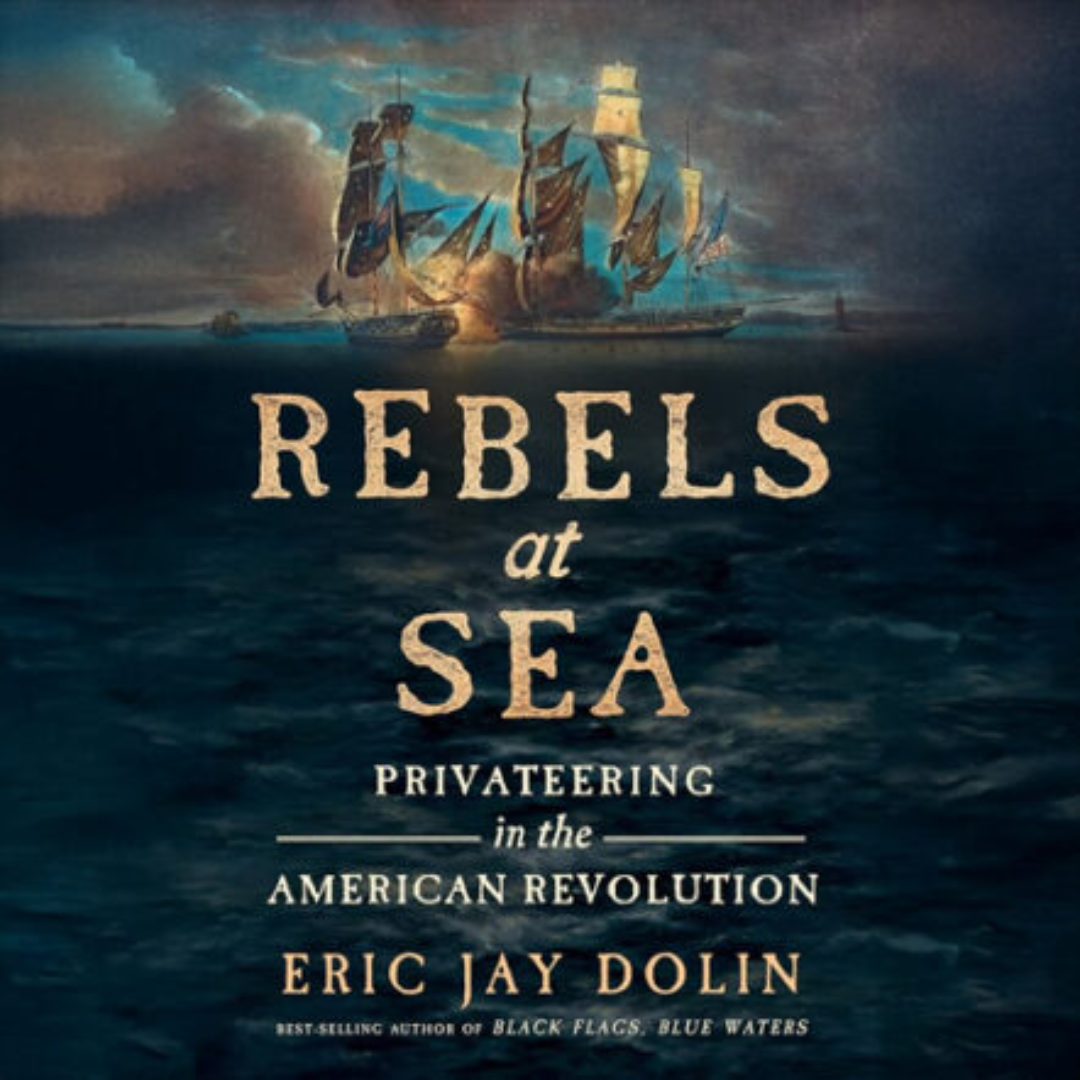
    About the Author: Eric Jay Dolin is the author of seventeen books, including Leviathan: The History of Whaling in America; A Furious Sky: The Five-Hundred-Year History of America’s Hurricanes; Black Flags, Blue Waters: The Epic History of America’s Most Notorious Pirates; and Rebels at Sea: Privateering in the American Revolution. His forthcoming book (June 2, 2026), is The Wreck of the Mentor: A True Story of Death, Despair, and Deliverance in the Age of Sail. Dolin's books have won many awards including the John Lyman Award for U.S. Maritime History; Fraunces Tavern Museum Book Award; National Society Daughters of the American Revolution Excellence in American History Book Award for Adult Nonfiction; Samuel Eliot Morison Book Award for Naval Literature; L. Byrne Waterman Book Award for Outstanding Contributions to Research and Pedagogy in the Arts, Humanities, and Sciences; James P. Hanlan Book Award; and the Outdoor Writers Association of America Book Award. Many of his books have been chosen as “must reads” by the Massachusetts Center for the Book. Other honors include being chosen as a finalist for the Kirkus Prize, and as one of the best books of the year by The Los Angeles Times, The Boston Globe, The Washington […]

    Free
  • LIFELONG LEARNING: Short-course in the History of Photography, 1839-1900

    New Bedford Whaling Museum 18 Johnny Cake Hill, New Bedford, MA, United States

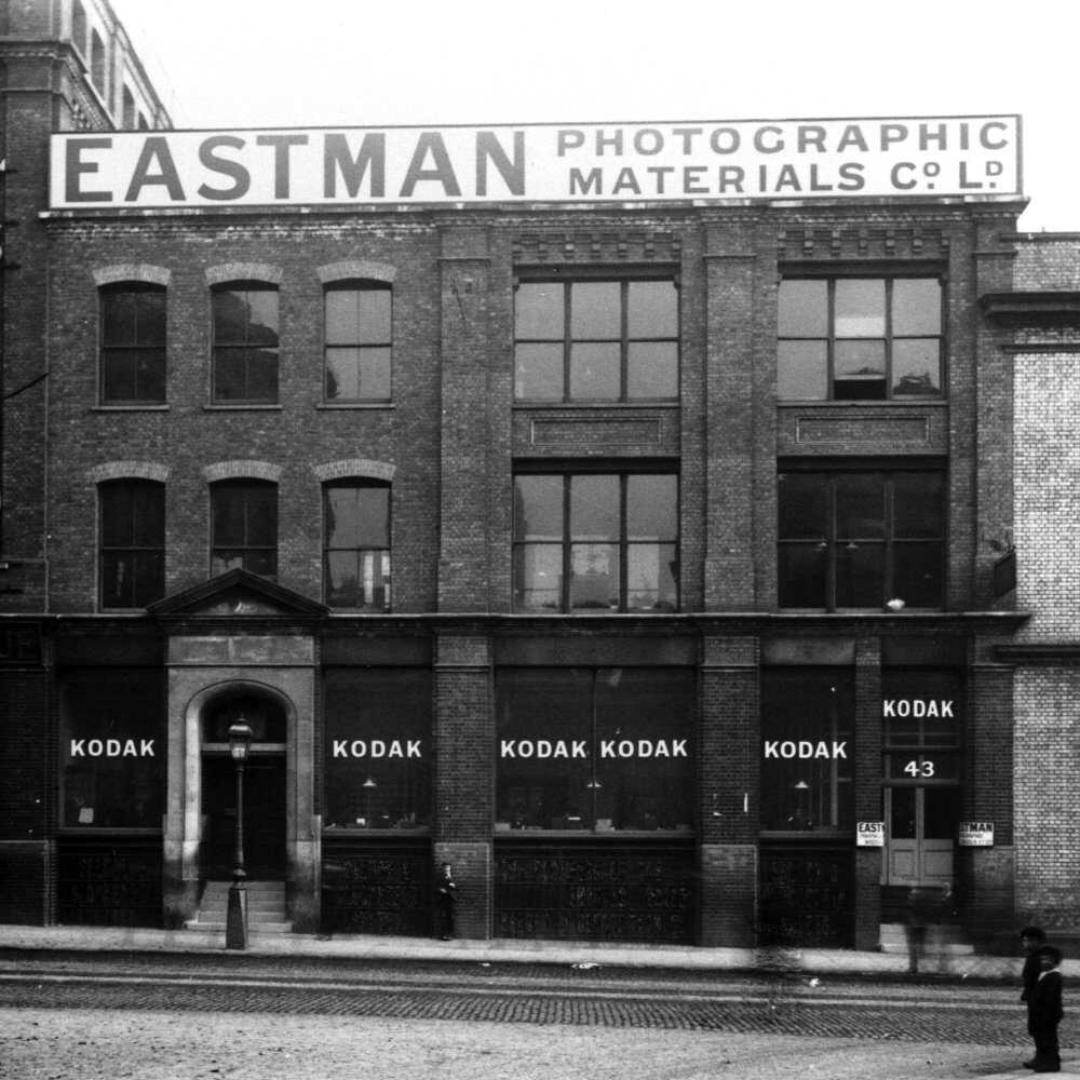
    Co-Led by Naomi Slipp, Douglas and Cynthia Crocker Endowed Chair for the Chief Curator & Director of Museum Learning; Marina Dawn Wells, Assistant Curator of History & Culture This unique virtual course combines six weekly 80-minute sessions of lecture and discussion, with a culminating hands-on workshop at the Museum. Learn what photography is and how it transformed the world directly from experts in the field using the vast resources of the NBWM photography collection as your study materials. Everyone walks around today with a camera in our pocket. But that was not always the case. Our world is saturated with photographic images – from magazine covers and Facebook feeds to Instagram and billboards–but have you ever stopped to wonder how these images work, what they are trying to say to you, or what histories they may connect with? This course introduces life-long learners to the history of photography, from the invention of the medium in 1839 to the birth of Kodak and snapshot photography in 1900. Photographs will be studied as art objects and historical artifacts. Themes include technological innovations; debates between art photography, commercial photography, and documentary photography; government and private patronage; individual or collective endeavors; original and published […]

  • Homeschool Day

    New Bedford Whaling Museum 18 Johnny Cake Hill, New Bedford, MA, United States

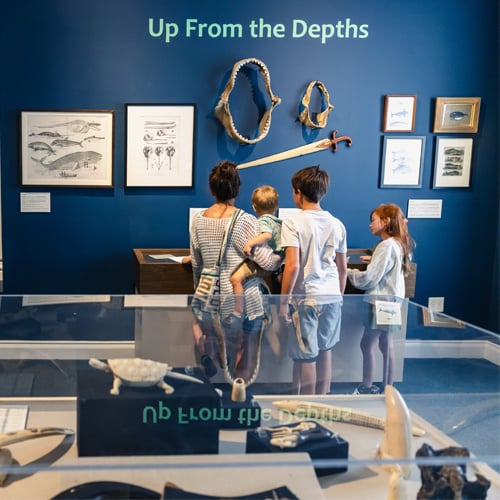
    Learn about art, history, science, and culture with activities designed for homeschool families. Explore the Kid’s Corner and the Interactive Topographic Sand Table or come for favorite activities like the Inflatable Whale. Look for scavenger hunt whales, and pretend to live on a whaling ship in the Sailor's Nook! Homeschoolers (ages 4-18) can visit at a discounted rate of $10.00 per student and $12.00 per adult for general admission. Children under 3 are free. On Homeschool Days, general admission includes the Inflatable Whale, Lagoda Below Deck, and other activity stations around the museum. Add tickets for the 3D Movie for $4.00 per person. Wonders of the Arctic is a 25-minute 3D Movie with showings at 10:30 am, 11:30 am, 12:30 pm, 1:30 pm, and 2:30 pm. Recommended for all ages. Schedule of Activities Squid Dissection Workshop in Museum Classroom (Main Level) Use dissecting tools to discover the unusual adaptations of squid by investigating their external and internal anatomy. This 60-minute hands-on Squid Dissection workshop is available at 9:45 am; 11:30 am; or 1:30 pm. $7.00 for participating students; no charge for accompanying adults. Pre-registration is recommended and space is limited to 16 students per session. Recommended for students ages 8 […]

  • First Friday: Texas Street Revival

    New Bedford Whaling Museum 18 Johnny Cake Hill, New Bedford, MA, United States

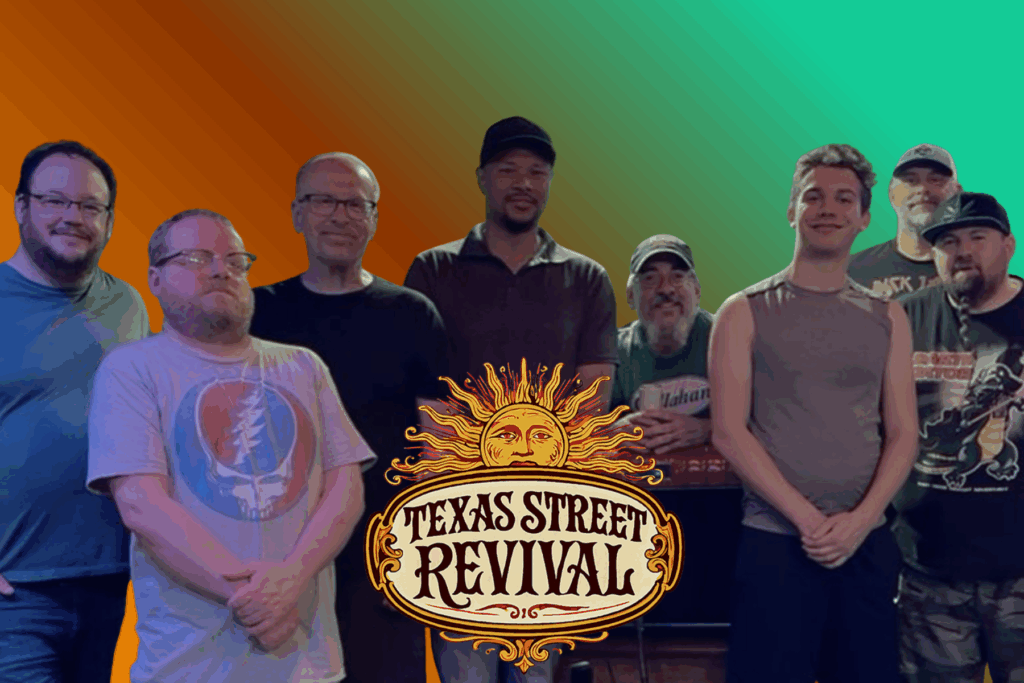
    Continuing the Museum’s monthly First Friday tradition, April’s evening includes a live performance by Texas Street Revival, a Providence-based band whose sound flows effortlessly between blues, funk, and roots-driven rock. At the heart of Texas Street Revival is a groove-forward approach led by multi-instrumentalist and vocalist Bill Cook, alongside drummer Glenn Alexander. For this special six-piece performance, they are joined by Mark Garabian (bass), Mike Cordeiro (keyboards), Tyler Volucci (saxophone), and Bill Lehourites (guitar), bringing added depth, texture, and dynamic range to the band’s live sound. Known for their deep rhythmic sensibility and collaborative spirit, Texas Street Revival balances tight arrangements with moments of improvisation, creating music that feels both intentional and expansive. Their latest album, Deep Black Sea, marks a compelling evolution in the band’s sound—exploring darker tonal territory and more intricate arrangements while pairing soulful melodies with layered instrumentation and introspective themes. Drawing inspiration from across musical traditions, the band moves seamlessly between intimate passages and driving, full-band intensity, an energy that translates powerfully in a live setting. Motif Magazine has described Texas Street Revival as “Funk & Fire” and declaring “there are some bands that play music, & others that build sonic architecture; layered, lived in spaces […]

  • LIFELONG LEARNING: Short-course in the History of Photography, 1839-1900

    New Bedford Whaling Museum 18 Johnny Cake Hill, New Bedford, MA, United States

    Co-Led by Naomi Slipp, Douglas and Cynthia Crocker Endowed Chair for the Chief Curator & Director of Museum Learning; Marina Dawn Wells, Assistant Curator of History & Culture This unique virtual course combines six weekly 80-minute sessions of lecture and discussion, with a culminating hands-on workshop at the Museum. Learn what photography is and how it transformed the world directly from experts in the field using the vast resources of the NBWM photography collection as your study materials. Everyone walks around today with a camera in our pocket. But that was not always the case. Our world is saturated with photographic images – from magazine covers and Facebook feeds to Instagram and billboards–but have you ever stopped to wonder how these images work, what they are trying to say to you, or what histories they may connect with? This course introduces life-long learners to the history of photography, from the invention of the medium in 1839 to the birth of Kodak and snapshot photography in 1900. Photographs will be studied as art objects and historical artifacts. Themes include technological innovations; debates between art photography, commercial photography, and documentary photography; government and private patronage; individual or collective endeavors; original and published […]

  • LIFELONG LEARNING: Short-course in the History of Photography, 1839-1900

    New Bedford Whaling Museum 18 Johnny Cake Hill, New Bedford, MA, United States

    Co-Led by Naomi Slipp, Douglas and Cynthia Crocker Endowed Chair for the Chief Curator & Director of Museum Learning; Marina Dawn Wells, Assistant Curator of History & Culture This unique virtual course combines six weekly 80-minute sessions of lecture and discussion, with a culminating hands-on workshop at the Museum. Learn what photography is and how it transformed the world directly from experts in the field using the vast resources of the NBWM photography collection as your study materials. Everyone walks around today with a camera in our pocket. But that was not always the case. Our world is saturated with photographic images – from magazine covers and Facebook feeds to Instagram and billboards–but have you ever stopped to wonder how these images work, what they are trying to say to you, or what histories they may connect with? This course introduces life-long learners to the history of photography, from the invention of the medium in 1839 to the birth of Kodak and snapshot photography in 1900. Photographs will be studied as art objects and historical artifacts. Themes include technological innovations; debates between art photography, commercial photography, and documentary photography; government and private patronage; individual or collective endeavors; original and published […]

  • LIFELONG LEARNING: Short-course in the History of Photography, 1839-1900

    New Bedford Whaling Museum 18 Johnny Cake Hill, New Bedford, MA, United States

    Co-Led by Naomi Slipp, Douglas and Cynthia Crocker Endowed Chair for the Chief Curator & Director of Museum Learning; Marina Dawn Wells, Assistant Curator of History & Culture This unique virtual course combines six weekly 80-minute sessions of lecture and discussion, with a culminating hands-on workshop at the Museum. Learn what photography is and how it transformed the world directly from experts in the field using the vast resources of the NBWM photography collection as your study materials. Everyone walks around today with a camera in our pocket. But that was not always the case. Our world is saturated with photographic images – from magazine covers and Facebook feeds to Instagram and billboards–but have you ever stopped to wonder how these images work, what they are trying to say to you, or what histories they may connect with? This course introduces life-long learners to the history of photography, from the invention of the medium in 1839 to the birth of Kodak and snapshot photography in 1900. Photographs will be studied as art objects and historical artifacts. Themes include technological innovations; debates between art photography, commercial photography, and documentary photography; government and private patronage; individual or collective endeavors; original and published […]

  • LIFELONG LEARNING: Short-course in the History of Photography, 1839-1900

    New Bedford Whaling Museum 18 Johnny Cake Hill, New Bedford, MA, United States

    Co-Led by Naomi Slipp, Douglas and Cynthia Crocker Endowed Chair for the Chief Curator & Director of Museum Learning; Marina Dawn Wells, Assistant Curator of History & Culture This unique virtual course combines six weekly 80-minute sessions of lecture and discussion, with a culminating hands-on workshop at the Museum. Learn what photography is and how it transformed the world directly from experts in the field using the vast resources of the NBWM photography collection as your study materials. Everyone walks around today with a camera in our pocket. But that was not always the case. Our world is saturated with photographic images – from magazine covers and Facebook feeds to Instagram and billboards–but have you ever stopped to wonder how these images work, what they are trying to say to you, or what histories they may connect with? This course introduces life-long learners to the history of photography, from the invention of the medium in 1839 to the birth of Kodak and snapshot photography in 1900. Photographs will be studied as art objects and historical artifacts. Themes include technological innovations; debates between art photography, commercial photography, and documentary photography; government and private patronage; individual or collective endeavors; original and published […]

  • LIFELONG LEARNING: Short-course in the History of Photography, 1839-1900

    New Bedford Whaling Museum 18 Johnny Cake Hill, New Bedford, MA, United States

    Co-Led by Naomi Slipp, Douglas and Cynthia Crocker Endowed Chair for the Chief Curator & Director of Museum Learning; Marina Dawn Wells, Assistant Curator of History & Culture This unique virtual course combines six weekly 80-minute sessions of lecture and discussion, with a culminating hands-on workshop at the Museum. Learn what photography is and how it transformed the world directly from experts in the field using the vast resources of the NBWM photography collection as your study materials. Everyone walks around today with a camera in our pocket. But that was not always the case. Our world is saturated with photographic images – from magazine covers and Facebook feeds to Instagram and billboards–but have you ever stopped to wonder how these images work, what they are trying to say to you, or what histories they may connect with? This course introduces life-long learners to the history of photography, from the invention of the medium in 1839 to the birth of Kodak and snapshot photography in 1900. Photographs will be studied as art objects and historical artifacts. Themes include technological innovations; debates between art photography, commercial photography, and documentary photography; government and private patronage; individual or collective endeavors; original and published […]

  • LIFELONG LEARNING: Short-course in the History of Photography, 1839-1900

    New Bedford Whaling Museum 18 Johnny Cake Hill, New Bedford, MA, United States

    Co-Led by Naomi Slipp, Douglas and Cynthia Crocker Endowed Chair for the Chief Curator & Director of Museum Learning; Marina Dawn Wells, Assistant Curator of History & Culture This unique virtual course combines six weekly 80-minute sessions of lecture and discussion, with a culminating hands-on workshop at the Museum. Learn what photography is and how it transformed the world directly from experts in the field using the vast resources of the NBWM photography collection as your study materials. Everyone walks around today with a camera in our pocket. But that was not always the case. Our world is saturated with photographic images – from magazine covers and Facebook feeds to Instagram and billboards–but have you ever stopped to wonder how these images work, what they are trying to say to you, or what histories they may connect with? This course introduces life-long learners to the history of photography, from the invention of the medium in 1839 to the birth of Kodak and snapshot photography in 1900. Photographs will be studied as art objects and historical artifacts. Themes include technological innovations; debates between art photography, commercial photography, and documentary photography; government and private patronage; individual or collective endeavors; original and published […]